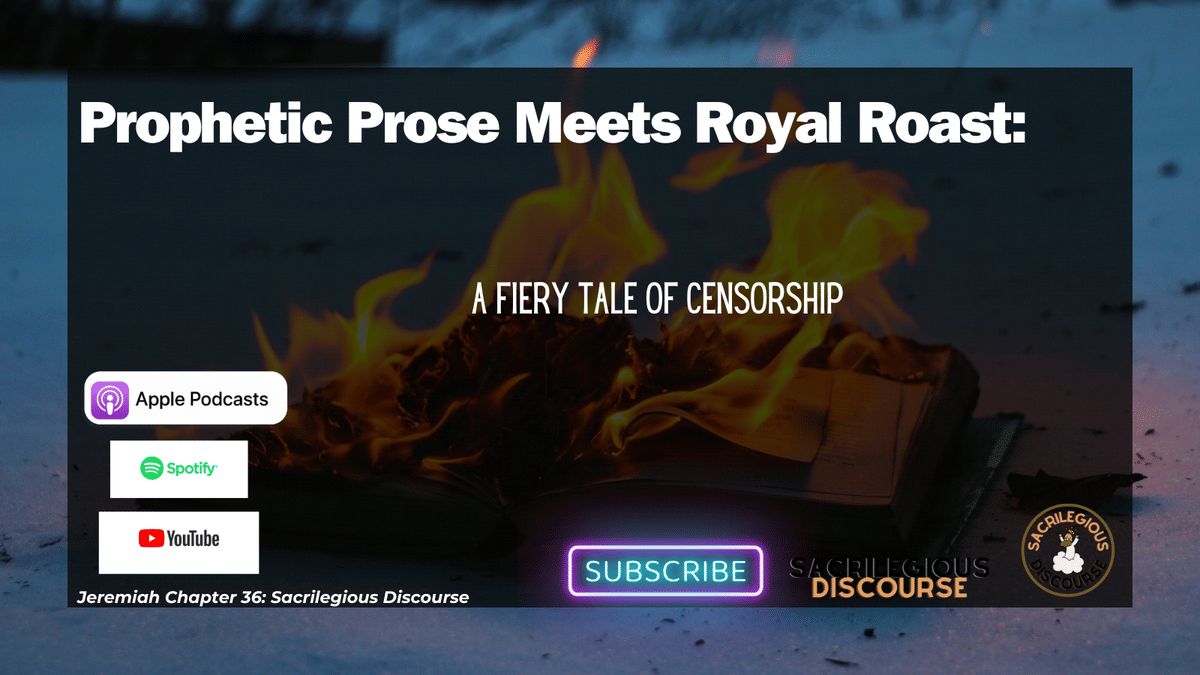
Hey there, history buffs and scripture skeptics! Prepare for an epic throwdown as we dive into an ancient episode of political intrigue and divine dictation that’s hotter than a Babylonian summer. If you thought modern politics was rife with censorship and dramatic flair, let me introduce you to the ancient art of scroll-burning, courtesy of King Joachim and the infamous prophet Jeremiah. Buckle up, folks—it’s about to get biblical.
Now, we all know that the Old Testament can be a treasure trove of "wait, what?" moments, and the tale of Jeremiah and his not-so-happy-go-lucky scribe Baruch is no exception. This dynamic duo found themselves in the ultimate pickle—spreading a message nobody wanted to hear and having to get creative about it. Seriously, this stuff is so spicy, even HBO would think twice before adapting it.
Let’s set the scene: Jeremiah, our main man with the (alleged) direct line to the Almighty, is out here trying to spread the divine word of impending doom. But alas, his VIP pass to the temple is revoked (possibly due to some divine dress code violation—sandals not formal enough, perhaps?). So, what’s a prophet to do? Delegate, of course! Enter Baruch, the scribe with enough guts to read Jeremiah’s prophecies aloud—because if there’s one thing history has taught us, it's that the messenger always gets a fair shake... said no one ever.
Subscribe to Podcast on Spotify
Our fearless scribe hits the stage, and the crowd goes mild—until the big cheese, King Joachim, gets wind of the shenanigans. Here’s where the “fiery tale of censorship” kicks in, literally. His Royal Highness doesn’t just dislike Jeremiah’s prophetic prose; he turns it into kindling for his royal fireplace. Talk about a critique! This scroll-slicing, flame-fanning fiasco wasn't just a royal "read" of Jeremiah’s work—it was the ancient equivalent of "I don’t like your tweet, so I’m setting my phone on fire."
Subscribe to Podcast on Apple Podcasts
The princes, a.k.a. the ancient spin doctors, knew they had a PR disaster on their hands. Did they cry out in horror? Tear their garments in distress? Nope. They just watched their king torch the parchment like it was a routine bonfire. Meanwhile, Jeremiah and Baruch are playing the original game of hide-and-seek, courtesy of some divine—or was it political?—intervention.

So, why is this tale of ancient censorship so deliciously relevant today? Because whether you're a devout believer or a staunch atheist, there's no denying that the themes of control, power, and the suppression of inconvenient truths are as old as the very scriptures themselves. It's like watching a high-stakes game of thrones, where the throne is metaphorical, and the game is trying not to get smited.
🛒Want to show your love for the podcast? Shop Amazon through our link!
Now, we could strip away the divine mantle and reinterpret this narrative through a purely secular lens, but where's the fun in that? Instead, let's savor the irony of a religious text that highlights the lengths to which those in power will go to silence the voices of dissent. It’s like the Bible is giving us a playbook on what not to do when faced with criticism. Thanks for the pro tip, ancient scrolls!
Before you go thinking this is all ancient history, just remember: the art of the royal roast is alive and well. Only now, it's less about burning scrolls and more about canceling, deplatforming, and shadow banning. But fear not, dear readers, for as long as there are powers-that-be and prophets (self-proclaimed or otherwise), there will be snarky podcasters here to call it like we see it—sans the fire hazard.
Until next time, keep your scrolls safe and your wine glasses full (unless you're a Rechabite, of course). This has been your not-so-holy guide to the drama of divine messages and political fires. Stay tuned for more tales that prove fact can be stranger than fiction, and history is just one big reality show, minus the rose ceremonies.